
 FAQ
FAQ Why Us?
 Service Guarantee
 Our Cleaning Process
 Cleaner Screening Process
 Commitment to Quality
 TidyHere Difference
 TidyHere vs Others
 Recurring Cleaning
 Move In / Out Cleaning
 Office Cleaning
 Housekeeping
 Post Construction Cleaning
 Green Cleaning
 Home Organization
 Deep Cleaning
 Oven Cleaning
 Airbnb Cleaning
 Refrigerator Cleaning
Stainless steel is a pretty popular kitchen material, especially for appliances and cookware. As with most things that are used regularly around the house, keeping stainless steel cookware looking new is best accomplished by cleaning it after each use. Layers of burnt-on grease are much harder to remove from pots and pans and in some cases may never come off at all.
We know even the best cooks can scorch a pan, but if you have the right gear, cleaning those tough stains isn’t as much of a pain as it would seem. Here are a few cleaning methods to keep your cookware gleaming.
Grab Your Supplies
For the methods below, you may want to have a variety of products and tools on hand. Here are a few of our best suggestions (plus some of our favorite products!) for the cleaning ahead:
✨ Spatula or paper towels
✨ Dish brush
✨ Scouring pad or scrubbing sponge
✨ Nonabrasive sponge
✨ Dish soap
✨ Towel
✨ Baking soda
✨ Oven mitts
✨ Toothpicks
✨ Large pot, like a stock pot or roasting pan
A Few Products We Love:
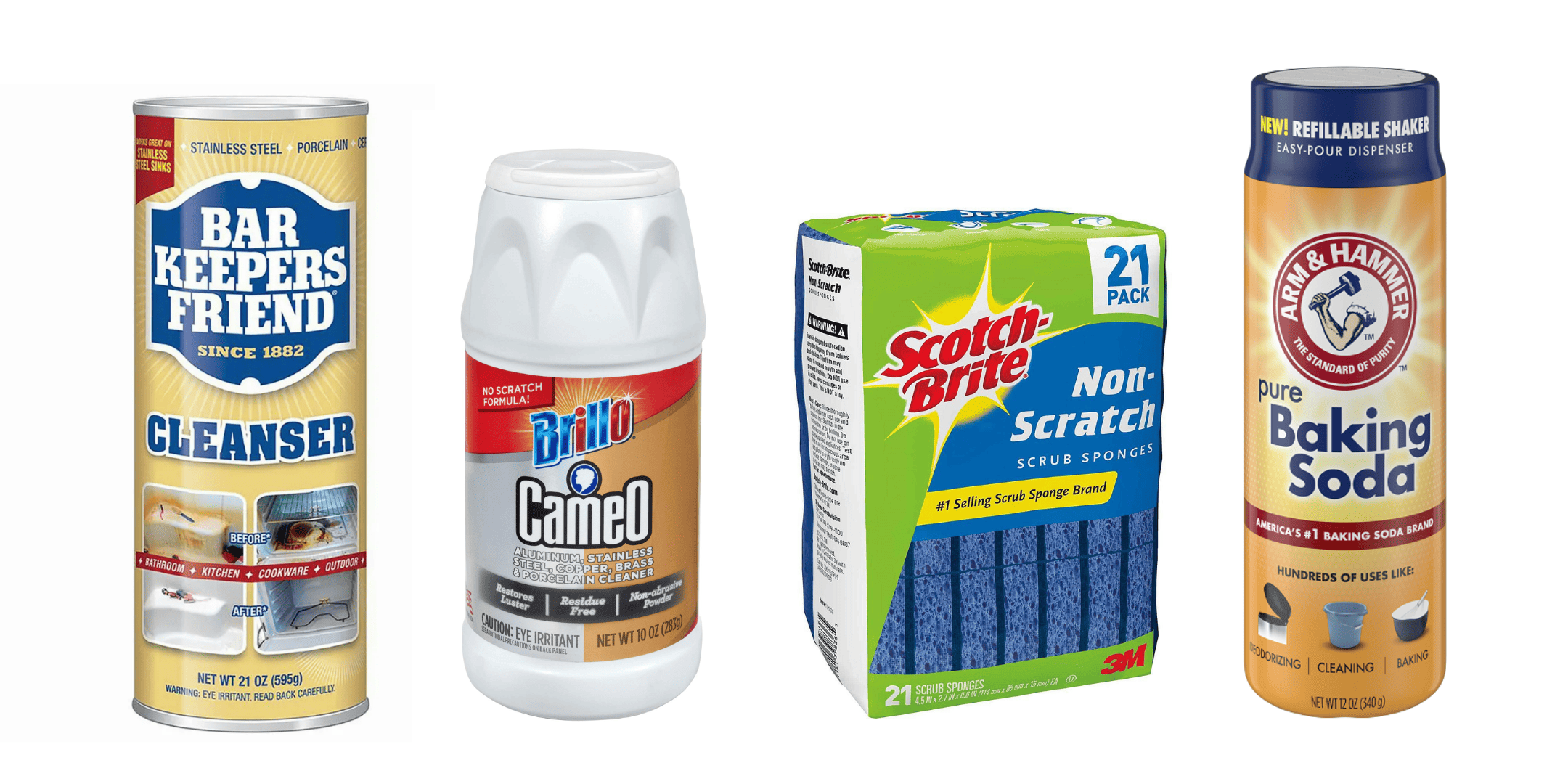
Bar Keeper’s Friend Powdered Cleanser
Brillo Cameo Aluminum & Stainless Steel Cleaner
Scotch-Brite Non-Scratch Scrub Sponges
And of course, our go-to product for any cleaning project: Arm & Hammer Baking Soda
How to Clean Burned Stainless Steel Pans
So how do you remove burnt-on food from stainless steel pans? Reaching for a heavy-duty scouring pad or steel wool pad to clean off any burnt-on stains on your pots and pans might seem like the right choice, but it’s actually not the best for the cookware. Products like these can be heavily abrasive for stainless steel and may create some damage on the surface of pans.
The safest way to get stained stainless steel pans back to their original shine is by using specialized stainless steel cookware cleaners and tools. If you use a store-bought cleaner, follow the manufacturer’s instructions and ensure that the product you use is safe to use on cookware, not just stainless steel appliances.
So how do you safely clean your stainless steel cookware? Keep reading for some of our best methods and hacks.
How to Clean Stainless Steel Pans
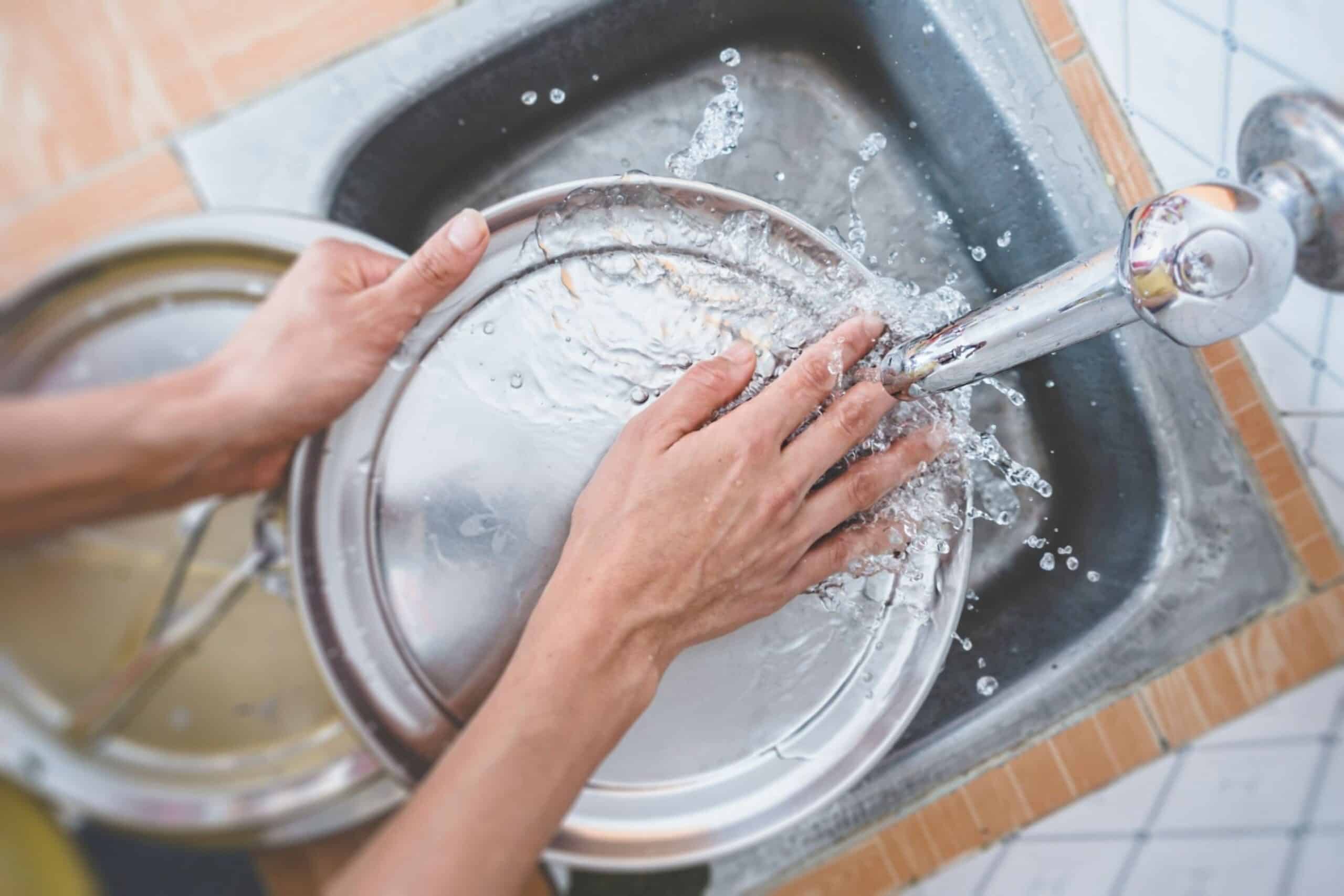
For regular cleaning and care of your stainless steel cookware, here is your guide.
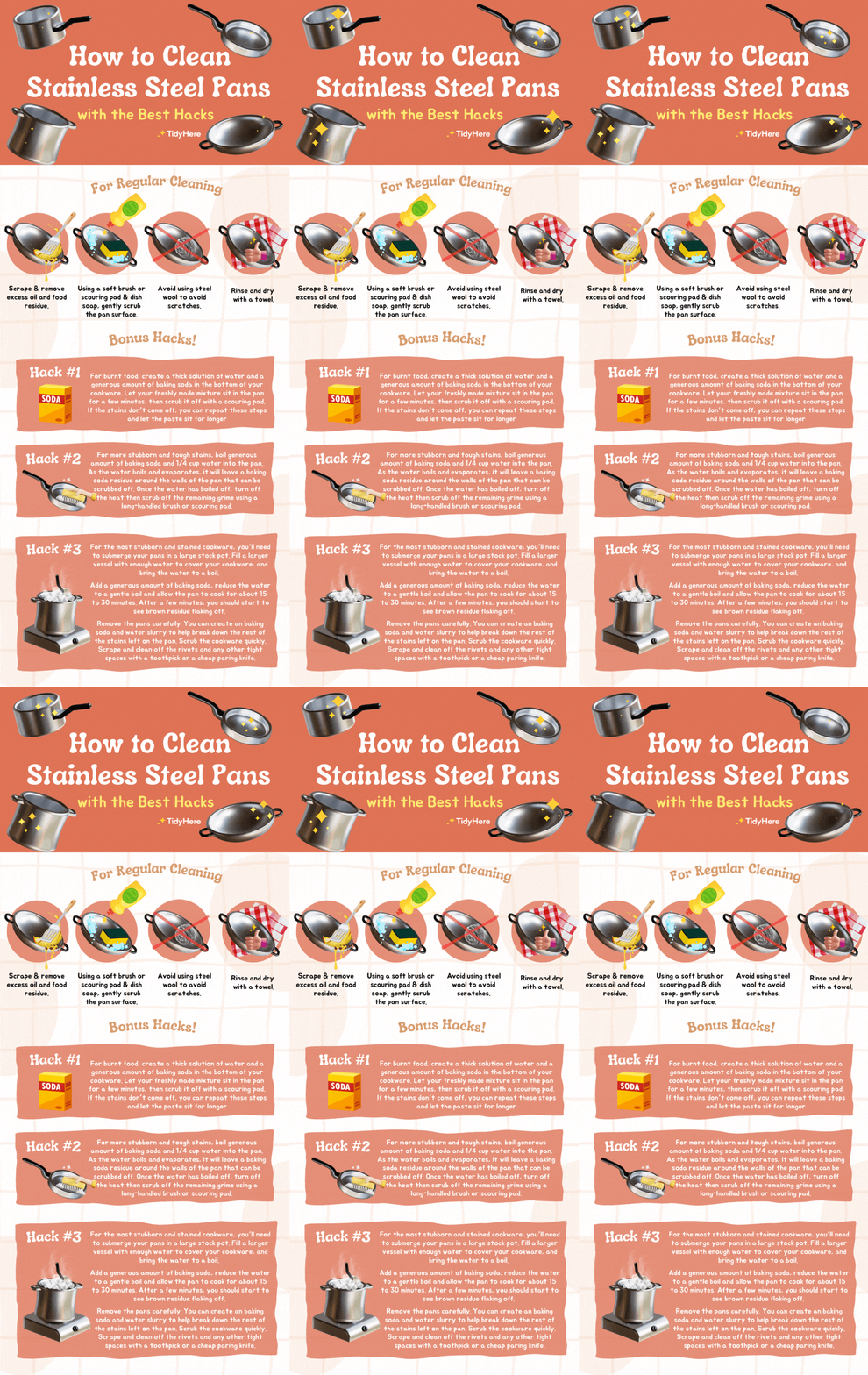
The first thing you’ll want to do after finishing with your cookware is scrape out excess oil with a spatula or wipe it out with a paper towel. Then rinse out the pan by adding some hot water to loosen up and remove any food residue and oils. Remember to always allow your pan to cool down before exposing it to cool water otherwise, the sudden change in temperature can cause your still-hot pan to warp.
Next, grab your trusty scouring pad or sponge and some dish soap, and gently scrub the inside and outside of the pan in circular motions. As long as you avoid using any harsh pads like steel wool, a scouring pad or sponge won’t affect your stainless steel’s performance or lifespan.
A softer sponge is a safe bet that won’t leave scratches, but using will definitely need some extra elbow grease. You can loosen any leftover food sticking to the pan with a long-handled dish brush with soft bristles. Finish up by rinsing and then drying your cookware with a clean, absorbent towel.
How to Clean Stainless Steel Pans with Baking Soda
How do you remove burnt-on food from stainless steel pans? If you’re in need of some more in-depth cleaning and stain treating on your stainless steel, here are 3 hacks that you can use to restore your cookware:

Hack #1:
To remove baked-on oil or burnt food, create a thick solution of water and a generous amount of baking soda (or another powdered cleaner like the ones we mentioned above) in the bottom of your cookware.
Let your freshly made mixture sit in the pan for a few minutes, then scrub it off with a scouring pad. If the stains don’t come off, you can repeat these steps and let the paste sit for longer or try one of the hacks below.
Hack #2:
To treat and remove more stubborn and tough stains that have reached up the sides of your cookware, try this method. Start by adding a generous amount of baking soda to the center of the pan, and then pour ¼ cup of water over the powder (you might need more for a bigger pan).
Bring this solution to a boil and as the water boils and evaporates, it will leave a baking soda residue around the walls of the pan that can be scrubbed off. As soon as most of the water has boiled off, turn off the heat and then use a long-handled brush or scouring pad to scrub off the remaining grime.
For the best results, do this while your pan is still hot, and remember to use gloves and hold the pan with a towel or oven mitt.
Hack #3:
For some of the most stubborn and stained cookware, you’ll need to really put in the TLC with this method. We know it’ll be weird to submerge and pull a large metal object from a huge pot of boiling water, but the results are worth the struggle. The hardest part of this method will probably be finding a vessel that will fit your pans, a large stock pot for small skillets or a roasting pan for larger ones should work.
Start by filling the larger vessel with enough water to submerge your cookware, and bring the water to a boil. Add in a generous amount of baking soda (maybe ¼ cup to ½ cup), and then carefully place your pan in the water.
Reduce the water to a gentle boil, and allow the pan to cook for about 15 to 30 minutes, rotating it if necessary so that all the sides are boiled. After a few minutes, you should start to see brown residue flaking off. Protect your hands with thick gloves or silicone oven mitts and use tongs to carefully remove the pans carefully.
Then, create an abrasive slurry to help break down the rest of the stains by adding baking soda and water to the still-hot pan. Scrub the cookware quickly and hold it with a towel to keep your skin safe. Scrape and clean off the rivets and any other tight spaces with a toothpick or a cheap paring knife.
For more tips and tricks for a spotless kitchen, check out our blog or contact us today to find out how we can help you keep your home looking and feeling great all year long.