 FAQ
FAQ Why Us?
 Service Guarantee
 Our Cleaning Process
 Cleaner Screening Process
 Commitment to Quality
 TidyHere Difference
 TidyHere vs Others
 Recurring Cleaning
 Move In / Out Cleaning
 Office Cleaning
 Housekeeping
 Post Construction Cleaning
 Green Cleaning
 Home Organization
 Deep Cleaning
 Oven Cleaning
 Airbnb Cleaning
 Refrigerator Cleaning
Stuffed animals might be your child’s beloved besties but if you think about it, they’re probably carrying a ton of germs, and bacteria, not to mention an army of dust mites. Ew?!
Don’t let yourself get grossed out, though. Instead, school yourself on how to best get those little guys clean. Here is everything you need to know to give your child’s stuffies a refresh and to get them clean enough to cuddle with abandon.
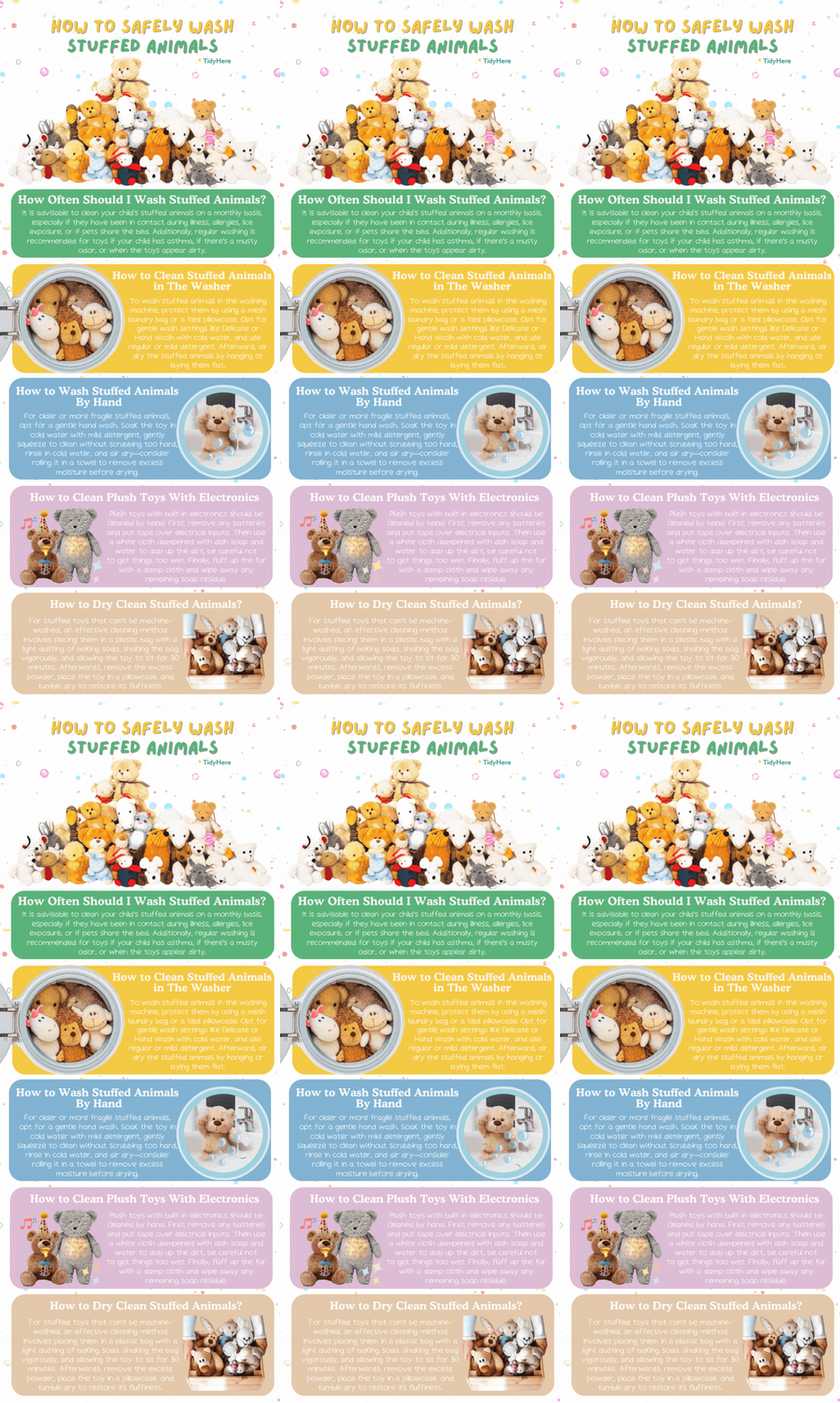
How Often Should I Wash Stuffed Animals?
The answer is: Probably more often than you think. It’s actually recommended that you wash your child’s stuffies monthly.
If your child has been cuddling with their stuffed toys during an illness, seasonal allergies, a bout with lice, or if family pets like to snuggle in bed too these are all reasons to give your toys a trip to the deep-cleaning spa.
We also recommend you wash toys regularly if your child has asthma, if the toys smell musty, and any time the toys look grimy.
Before Washing Stuffed Animals
If your stuffed animal has care instructions on the tag, use those instructions to help you decide whether to use the washing machine, hand wash, or only spot-treat stains.
Make sure stuffed animals will stand up to cleaning by rubbing a small amount of diluted detergent on a less visible part of the fabric. If any color comes away, use only water to clean it.
It’s always good to wash stuffed animals after your child has been sick or weekly if they sleep with them. Learn more about how to sanitize laundry, including stuffed animals. Otherwise, wash as needed, particularly when the stuffed animals start to look dirty or smell.
How to Clean Stuffed Animals in The Washer
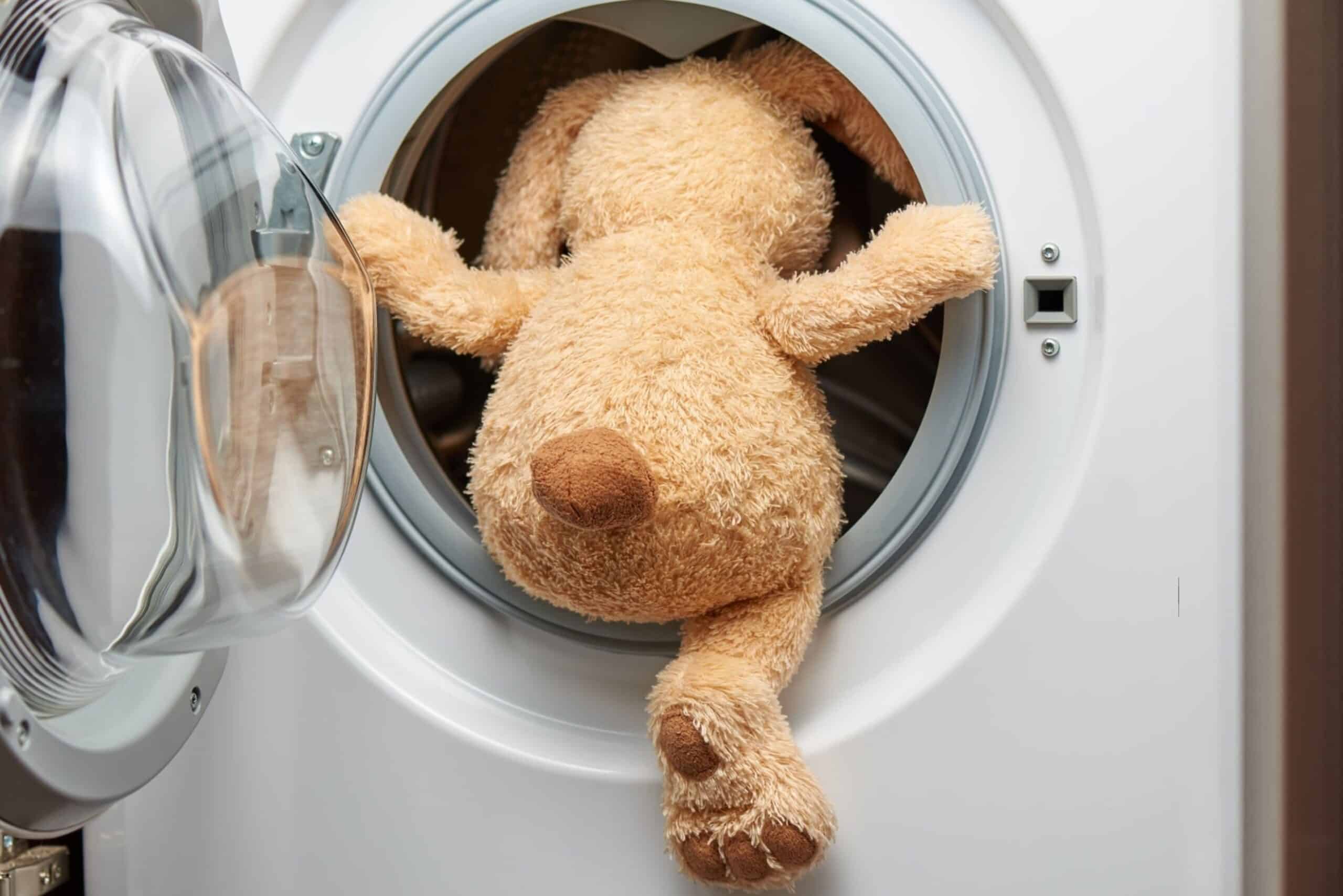
Most stuffed animals can be washed in the washing machine, but we’ll also share how and when to hand-wash them. First, we’ll walk through how to wash stuffed animals in the washer, making it easy to do as often as needed.
✨ Protect the stuffed animal: Place the stuffed animal in a mesh laundry bag, zippered pillowcase, or pillowcase with the ends tied for added protection against wear and tear.
✨ Choose gentle wash settings: We recommend using the Delicate, Hand Wash, or Gentle cycle setting on your washing machine (if available), along with cold water to help keep colors from fading. Learn more about choosing wash cycles and settings.
✨ Add detergent: Feel free to use your regular detergent when washing stuffed animals, or a mild detergent if you have it on hand.
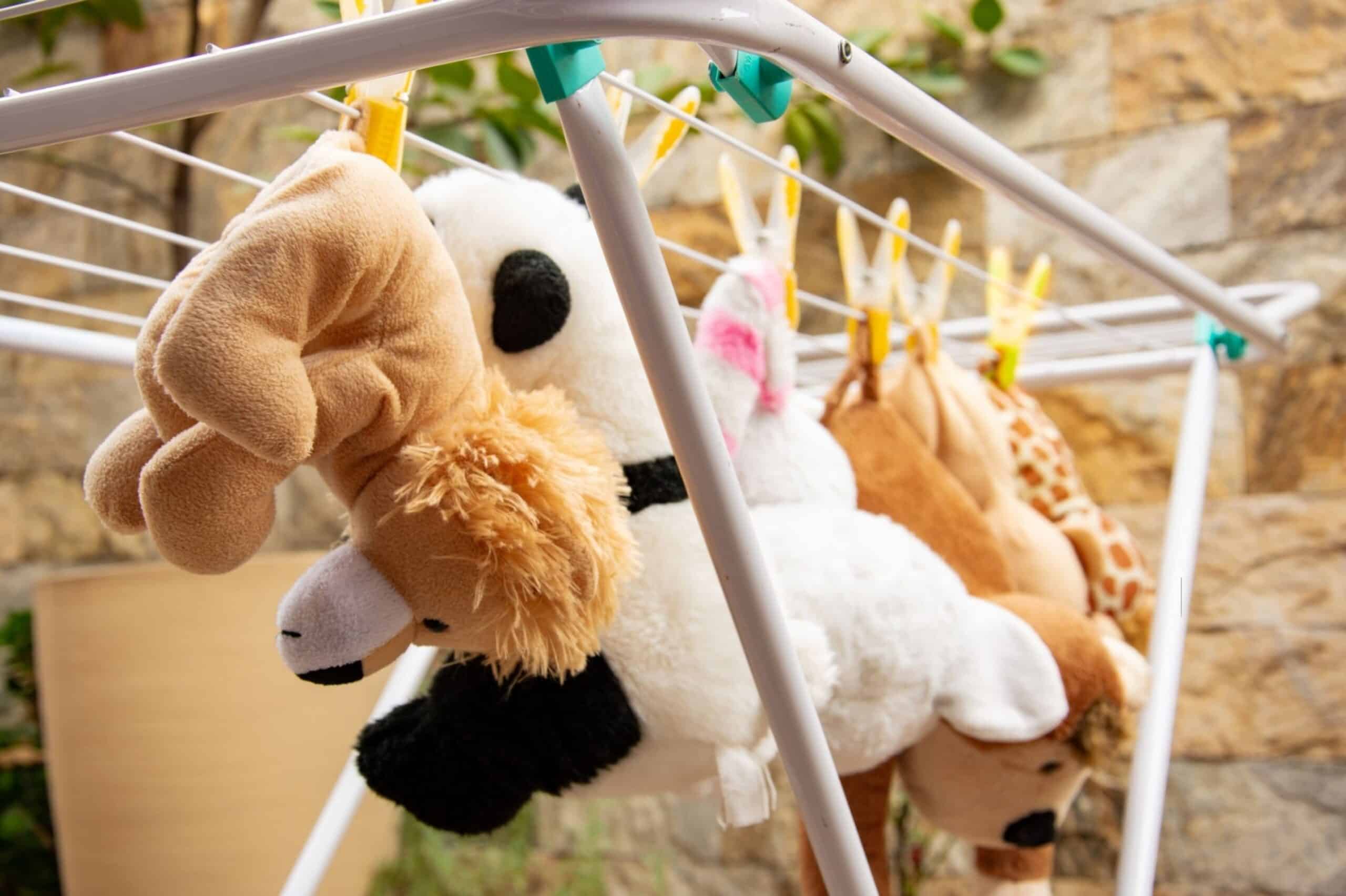
✨ Air dry: Take the stuffed animals out of the mesh bag or pillowcase and hang or lay them flat to dry.
How to Wash Stuffed Animals By Hand
Older or more fragile stuffed animals may need a lighter touch and can be washed gently by hand using the following simple steps.
✨ Soak in cold water: Fill a bucket or sink with enough cold water to submerge the stuffed animal.
✨ Add detergent: Add a small amount of mild or gentle detergent to the water.
✨ Hand wash: Gently squeeze the stuffed animal to saturate it with detergent. Don’t scrub too hard since older stuffed animals may have loose strings or worn fabric.
✨ Rinse: Refill the bucket or sink with clean, cold water or hold the stuffed animal under cold running water and squeeze it gently to rinse out the detergent, avoiding wringing.
✨ Air dry: You’ll definitely want to air dry an older or more fragile stuffed animal, but to help remove moisture, you can roll it in a clean, dry towel first.
How to Clean Plush Toys With Electronics
Remember that when in doubt, cleaning stuffed animals should be done manually or you could ruin your little furry pal forever. Plush toys with built-in electronics require special care to avoid damaging their parts. Follow these steps to clean them by hand:
✨ Remove any batteries and put tape over electrical inputs.
✨ Use a white cloth dampened with dish soap and water to dab up the dirt, and be careful not to get things too wet.
✨ Fluff up the fur with a damp cloth and wipe away any remaining soap residue.
How to Dry Clean Stuffed Animals?
Some well-loved toys that can’t be machine-washed or submerged in soapy water may still need a thorough cleaning to remove oils. In those instances, there is still hope! Here are a few tips for those stuffies that need special care:
✨ Bag, sprinkle, and shake: Simply put the stuffie in a plastic baggie, sprinkle it with a light layer of baking soda, and then shake the bag vigorously for a few minutes. Let the toy sit for about 30 minutes to allow the baking soda to absorb the oils and odors.
✨ Tumble clean: After you’ve allowed the baking soda to do its magic, remove the stuffed animal from the bag and shake off the excess. Then place the toy into a pillowcase and toss it in the dryer on the tumble dry setting to fluff it up.
FAQs
Can you put a stuffed animal in the dryer?
Short answer: yes! However, you should use the no- or low-heat setting or simply air-dry plush toys, as fur can get burned in a hot dryer.
How do you clean stuffed animals without ruining them?
Remove or secure loose parts, spot clean, put the stuffie in a mesh bag, use a gentle laundry detergent, run the delicate cycle, and skip the dryer.
How do you wash a stuffed animal and make it fluffy again?
Once the toy is done washing, and the toy is still slightly damp, run it through the dryer on low for 5 to 10 minutes to fluff up the fur.
Can you wash a stuffed animal with shampoo?
Yes, you can use a gentle shampoo to clean a stuffed animal, but it is suggested that you use a gentle hand soap or detergent.
Be sure to book your home’s cleaning services with us sooner rather than later so that you’re ready for this holiday season!